
Marmara marble
The white marble of Marmara Island has been quarried for more than 2,500 years.
Proconnesus, the marble island
In antiquity the island was called Proconnesus. Its later name, Marmara, comes from marmaron, the Greek word for marble, and the Sea of Marmara takes its name from the island.
From Rome to Constantinople
Proconnesian marble was among the most widely traded stones of the Roman and Byzantine world. Quarried close to the shore, it could be loaded straight onto ships. It was used for columns, capitals, sarcophagi and wall cladding, and it is the marble of Hagia Sophia.
The Ottoman centuries
Ottoman builders used it in mosques, palaces, fountains, hamams and tombstones, among them the Sultanahmet (Blue) Mosque and Topkapı Palace.
How to recognise it
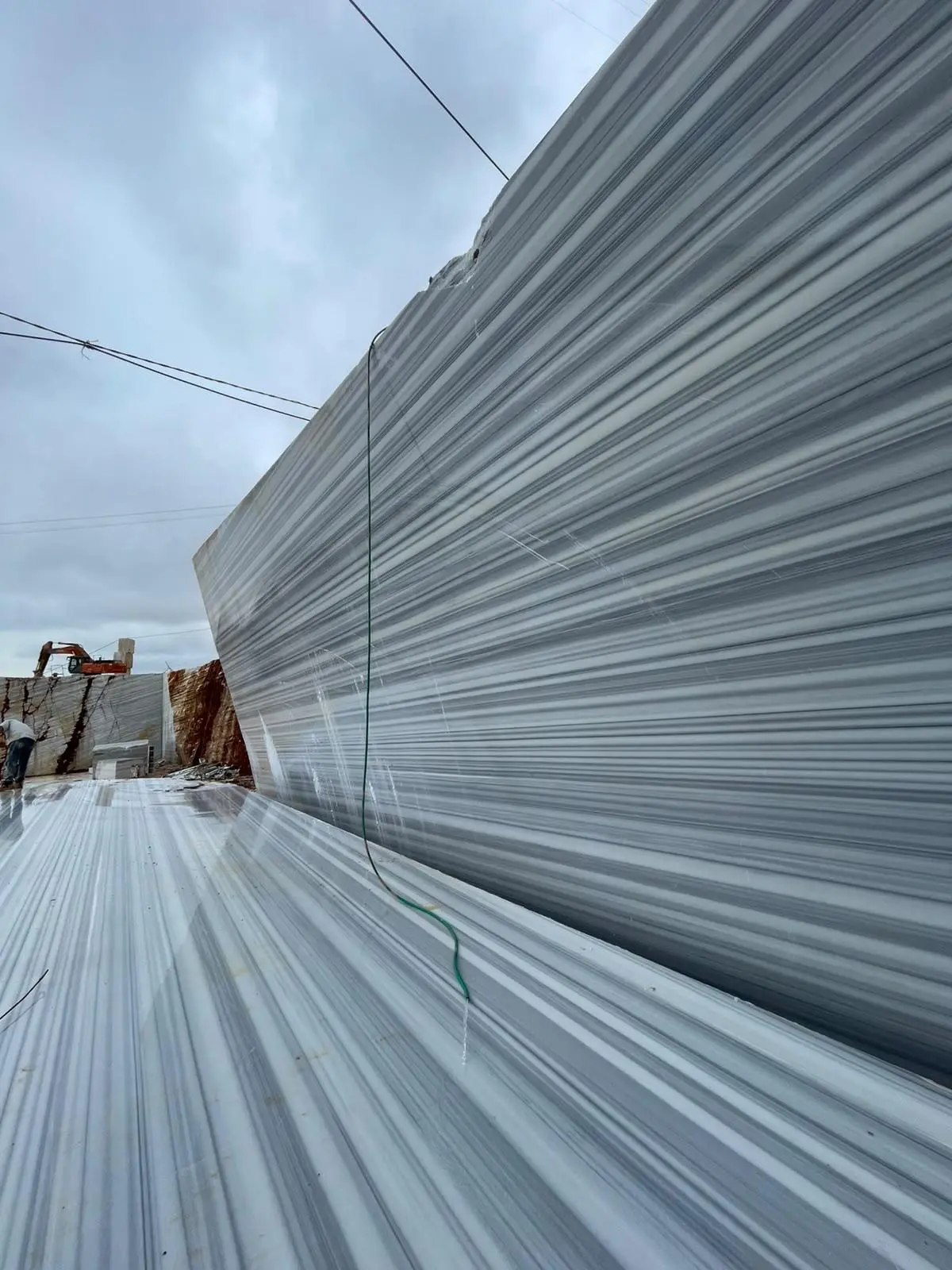
A white to grey-white ground with grey to blue-grey veins, often in parallel bands. Its medium to coarse crystals give a fresh surface a slight sparkle. Cut across the layers, the veins appear as stripes; cut along them, as soft clouds.
A protected name
“Marmara Adası Mermeri / Marmara Mermeri / Marmara Beyazı” is a geographical indication registered with the Turkish Patent and Trademark Office (no. 387, 16 October 2018). The name is tied to Marmara Island. Buying from a producer on the island is buying from the source.